

How State Laws Can Change the Risk in Your Master Service Agreement Quick Summary: State law...
Your “Standard” Master Service Agreement May Be Putting You at Risk

Quick Summary:
- No universal definition of a "standard" MSA exists in contract law
- Boilerplate language often hides real risk beneath familiar phrasing
- Jurisdiction, industry, and business model all affect enforceability
- Courts analyze actual contract language—not whether clauses are "standard"
- Professional review reveals gaps most businesses don't expect to find
The word "standard" sounds reassuring. It suggests safety, widespread acceptance, and vetted reliability. In business contracts, it often means none of those things.
When businesses describe their Master Service Agreement as "standard," they usually mean it was copied from somewhere else, hasn't been updated in years, or came from a source they trust without verification. What they rarely mean is that it's been reviewed for their specific business model, updated for their jurisdiction, or aligned with how they actually operate. The assumption that "standard" equals "safe" creates a blind spot where real legal risk accumulates silently.
Standard doesn't mean appropriate. It just means familiar. And familiarity in contract language can mask serious problems until those problems become expensive disputes.
What People Mean When They Say "Standard MSA"
Most businesses default to "standard" agreements for understandable reasons. They're time-efficient, feel legally legitimate, and create the comforting impression that someone else has already done the hard work. The typical sources include downloaded templates from legal websites, legacy agreements the company has used for years, contracts inherited from previous counsel or advisors, and agreements shared by peers, agencies, or industry contacts.
None of these sources are inherently problematic. The issue isn't where the agreement came from—it's the assumption that widespread use equals universal applicability. A contract that works perfectly for a California software company might create significant exposure for a Texas marketing agency, even if both businesses describe themselves as "service providers."
The term "standard" becomes a mental shortcut that replaces actual evaluation. When you describe your MSA as standard, you're often signaling that you haven't customized it, updated it recently, or verified it matches your current operations. That's not a criticism—it's the reality for most growing businesses operating under time and resource constraints.
Why "Standard" Breaks Down Legally
Contract law doesn't recognize "standard" as a category with legal significance. No governing authority defines what qualifies as a standard MSA, no regulatory body certifies template language, and no court defers to a clause simply because it's commonly used. Enforceability is contextual—determined by the specific language, the parties involved, the jurisdiction, and the facts of the dispute.
When a contract lands in court, judges analyze the actual terms, how those terms were applied to the relationship, and whether enforcement would be reasonable under the circumstances. The fact that thousands of other businesses use similar language carries no weight in that analysis. A judge won't uphold an ambiguous ownership clause just because it's "industry standard."
Common doesn't equal enforceable. A widely used indemnity provision can still fail if it's poorly drafted, overly broad, or conflicts with state law. Popularity doesn't cure legal deficiencies—it just means more businesses are exposed to the same risk.
"Courts enforce contracts, not conventions."
The Hidden Risks Inside "Standard" MSAs

The problems with standard MSAs aren't usually obvious at signing. They surface under pressure—during disputes, when enforcing terms, or when regulators examine your contractor relationships. Here's where boilerplate language most often fails businesses.
Clauses Written for the Wrong Business Model
Many standard MSAs contain language designed for employee relationships, not independent contractors. These include control provisions about work hours, location requirements, or supervision methods that contradict contractor independence. When such language appears in a contractor agreement, it becomes evidence of misclassification.
The IRS, Department of Labor, and state agencies examine the actual working relationship—not what you call someone in the contract title. If your "standard" MSA includes employee-style control provisions, you're creating documentation that works against you in a classification audit. These clauses don't just fail to protect you—they actively expose you to back taxes, penalties, and wage claims.
The safest approach is to ensure your MSA language aligns with true contractor independence: the contractor controls how work is performed, uses their own tools and resources, maintains multiple clients, and operates as a separate business entity. Understanding how 1099 and W2 classifications differ is critical to avoiding these pitfalls.
Jurisdiction Blind Spots
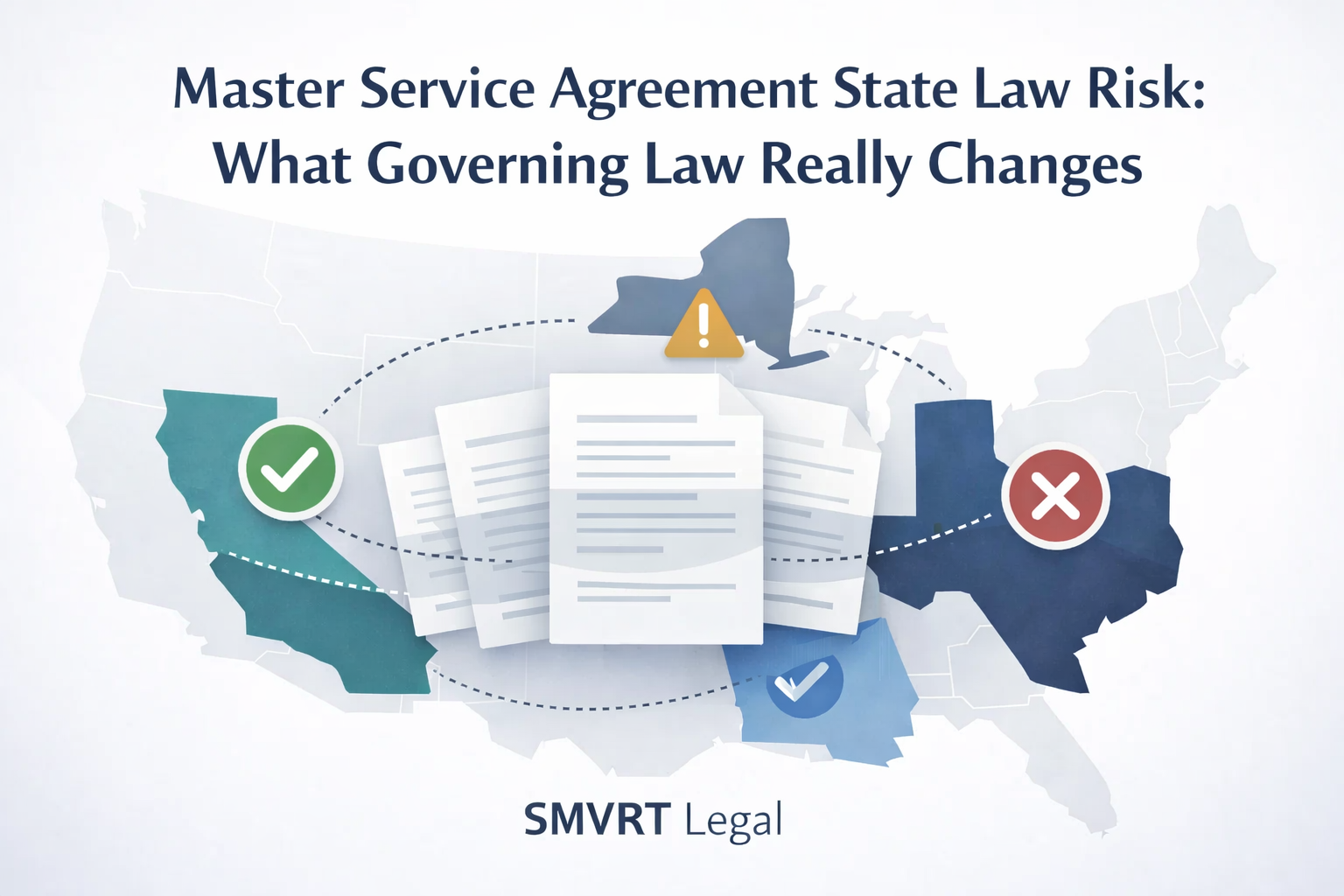
A standard MSA drafted for one state can fail catastrophically in another. California, for instance, has specific requirements around contractor classification that varies dramatically by state, along with non-compete prohibitions and fee recovery rules that differ markedly from Texas or Florida law. What's enforceable in one jurisdiction may be void—or worse, create liability—in another.
The governing law clause in your MSA determines which state's laws apply to disputes, but it doesn't override mandatory protections in the state where work is actually performed. If you operate across multiple states, your "standard" agreement likely has blind spots where state-specific requirements aren't addressed. These gaps don't appear until enforcement, when you discover your contract doesn't work the way you assumed.
Ownership Language That Sounds Right—But Isn't
Standard MSAs often use vague ownership language that creates ambiguity about who actually owns deliverables. Phrases like "work product created during the engagement" or "materials developed for the client" sound clear until you need to enforce them. The problems appear when contractors claim ownership of code, designs, or content you thought belonged to you.
Under copyright law, independent contractors own what they create unless there's an explicit, written assignment of those rights. "Work for hire" doctrine—which automatically assigns ownership to employers—generally doesn't apply to independent contractor relationships. Without clear assignment language, your standard MSA may leave you with a license to use the work, not actual ownership.
The distinction matters enormously when you try to sell your business, license your IP, or enforce rights against third parties. Prospective buyers or investors will discover during due diligence that you don't fully own assets you thought were yours. This is exactly why ownership language in contractor agreements requires precision, not assumptions.
Liability Provisions That Don't Work When Triggered
Liability caps and indemnity clauses in standard MSAs often contain exceptions that swallow the protection. A clause that limits liability to "fees paid in the past 12 months" might seem reasonable until you read the carve-outs for gross negligence, willful misconduct, IP infringement, confidentiality breaches, and regulatory violations. Those exceptions can expose you to unlimited liability in exactly the scenarios where you need protection most.
Indemnity provisions create similar problems when they're drafted too broadly or use unclear trigger language. A mutual indemnity clause might require you to defend the contractor against claims arising from your own business operations—far beyond what you intended when you signed. The ambiguity doesn't matter at contract execution, but it becomes determinative when actual claims arise.
Standard language around liability often prioritizes balance and reciprocity over actual protection. That makes the contract easier to negotiate but less effective when triggered. Courts enforce what's written, not what the parties thought they agreed to, which means boilerplate liability provisions frequently fail at the moment they're needed most.
"Everyone Uses This Clause"—Why Courts Don't Care
Business owners often defend contract provisions by pointing to their widespread use. "Everyone includes this clause," they argue, as if popularity confers legitimacy. In contract disputes, that argument fails immediately.
Judicial analysis focuses on the specific language in your contract, applied to your specific circumstances, under the governing law of your jurisdiction. Industry norms and standard practices might provide context, but they don't override clear contractual language or mandatory legal requirements. A judge won't enforce an ambiguous termination clause just because "that's how agencies always write them."
What matters in enforcement is whether the language is clear, whether it violates public policy, whether both parties understood its meaning, and whether applying it would be unconscionable. The fact that thousands of other businesses use identical language is legally irrelevant. Enforcement history matters more than prevalence—courts look at how similar clauses have been interpreted in actual disputes, not how many templates include them.
"Widespread use doesn't cure drafting defects."
Risk Reflection: When Standard Becomes Risky
Most contract risk isn't visible at signing. Problems surface when you need to enforce ownership, when regulators audit relationships, or when disputes escalate. Prevention beats enforcement—reviewing your MSA before problems arise costs far less than fixing issues after they surface.
Before you rely on that “standard” MSA…
Get a lawyer-led contract review that identifies ownership gaps, liability exposure, and state-specific risks — delivered in plain English within 24 hours.
👉 Get My 24-Hour MSA ReviewWhen a "Standard" MSA Actually Works
Not all standard MSAs are problematic. A well-maintained agreement that's been properly tailored can serve as an effective foundation for contractor relationships. The difference lies in how the agreement is used and whether it's actually aligned with your business operations.
A standard MSA works when it's been reviewed and updated regularly—at least annually or whenever business operations change significantly. It should be tailored to your specific jurisdiction, with governing law and venue provisions that make sense for where you operate. The agreement must align with how work is actually performed, not describe an idealized relationship that doesn't match reality.
Effective MSAs maintain a clear hierarchy with Statements of Work (SOWs), where the MSA establishes general terms and each SOW defines project-specific details. The definitions throughout should be consistent—terms like "deliverables," "confidential information," and "work product" mean the same thing in every section. When these elements are in place, a properly structured master service agreement can provide genuine protection rather than creating hidden exposure.
The Cost of Relying on the Wrong "Standard"
The real cost of using the wrong standard MSA isn't the contract itself—it's what happens when that contract fails to protect you. These failures compound over time, creating exposure that grows silently until triggered by a dispute, audit, or business transaction.
Disputes escalate faster when contract language is ambiguous. What should be a straightforward conversation about deliverable ownership becomes a multi-month negotiation because neither party can point to clear contractual language. Ambiguity creates negotiation leverage for the other side—they can interpret unclear provisions in their favor, and you lack the contractual foundation to counter effectively.
The uncertainty affects pricing and growth in ways that aren't immediately obvious. Prospective clients ask about IP ownership, data security, or liability protection, and you can't confidently answer because your MSA doesn't clearly address those issues. Investors conducting due diligence discover gaps in your contractor agreements and reduce valuations accordingly. Banks hesitate to extend credit when they can't verify that you own the assets you're pledging as collateral.
Risk compounds silently over time. Each contractor you engage under a deficient MSA creates another potential claim, another classification risk, another ownership dispute waiting to surface. The longer you operate with inadequate agreements, the more exposure accumulates—and the more expensive remediation becomes when you finally address it.
Know what your “standard” agreement actually exposes
Upload your MSA for a fast, lawyer-led risk review and understand your ownership, liability, and enforceability gaps before they cost you.
👉 Review My MSA for RiskFAQs—Standard Master Service Agreements
Final Thought
"Standard" is a starting point—not a safeguard. It tells you where an agreement came from, not whether it works for your business. The comfort that comes from using familiar language is often misplaced, creating a false sense of security that obscures real vulnerabilities.
The businesses that are genuinely protected aren't the ones using the most popular templates. They're the ones whose contracts have been reviewed for their specific operations, updated for their jurisdictions, and aligned with how they actually work. That requires treating contracts as risk management tools rather than administrative formalities.
Confidence through clarity. When you know what your MSA actually says, how it applies to your relationships, and whether it holds up under pressure, you can operate with certainty rather than assumption. That clarity doesn't come from finding a better template—it comes from professional review of the agreement you're actually using.

.png?width=50&name=Nancy%20Nassaka%20(310x310).png)