
.png?height=200&name=Contractor%20Agreement%20Checklist_%207%20Must-Have%20Clauses%20(1).png)

Contractor Agreement Checklist: 7 Must-Have Clauses Use this plain-English checklist to build a...
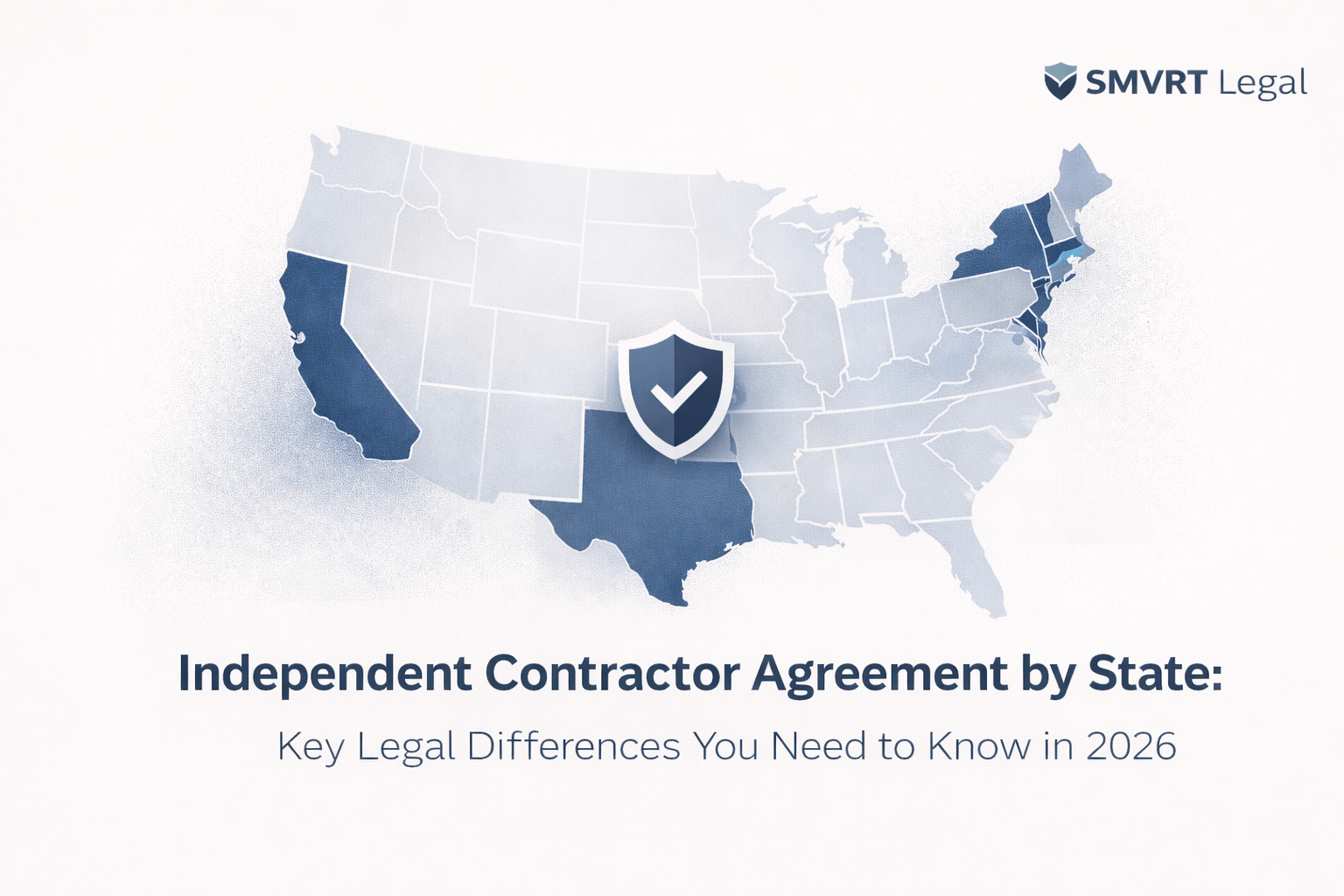
Independent Contractor Agreement by State: Key Legal Differences You Need to Know in 2026
Hiring independent contractors can be a smart move. It gives small businesses, freelancers, and founders flexibility — you can scale fast without adding payroll overhead.
But here’s the catch: what counts as an independent contractor in one state might make you a full-blown employer in another.
California’s rules look nothing like Texas’s. New York requires written agreements for certain freelancers. And a few states — like Massachusetts — treat nearly everyone as an employee unless you can prove otherwise.
The result? If you use a one-size-fits-all agreement, you could end up facing hefty penalties, tax issues, or even lawsuits for “misclassification.”
In this guide, we’ll break down the major state-by-state differences in independent contractor laws — so you can stay compliant, protect your business, and confidently hire the help you need.
💡 Pro Tip: You can access Smvrt Legal’s free Independent Contractor Agreement template inside the platform to make sure your contracts meet federal standards — and use our Compliance Checker tool to verify compliance across states automatically.
Why Independent Contractor Laws Differ by State
There’s no single national standard for determining who qualifies as an independent contractor.
At the federal level, the IRS uses what’s called the Common Law Test, which looks at three key factors:
- Behavioral Control: Do you tell the worker how to do their job?
- Financial Control: Who decides how the worker gets paid, reimbursed, or buys tools?
- Relationship Type: Is there an ongoing relationship that looks like employment?
If you control all three, they’re likely an employee.
But each state can layer its own rules on top of those IRS standards — especially in areas like wage laws, tax withholding, and unemployment insurance. That’s why knowing your state’s classification test is critical.
The Federal Baseline: The IRS Common Law Test
The IRS Common Law Test determines status by examining the degree of control between a company and a worker. The more control you have, the more likely that worker is an employee.
This matters for taxes, liability, and benefits. Employers must withhold income and payroll taxes for employees — not for contractors. Misclassifying can result in back taxes, penalties, and interest.
Most states adopt some variation of this IRS test. But a few — notably California and Massachusetts — go much further.
States with the Strictest Independent Contractor Laws (2026 Update)
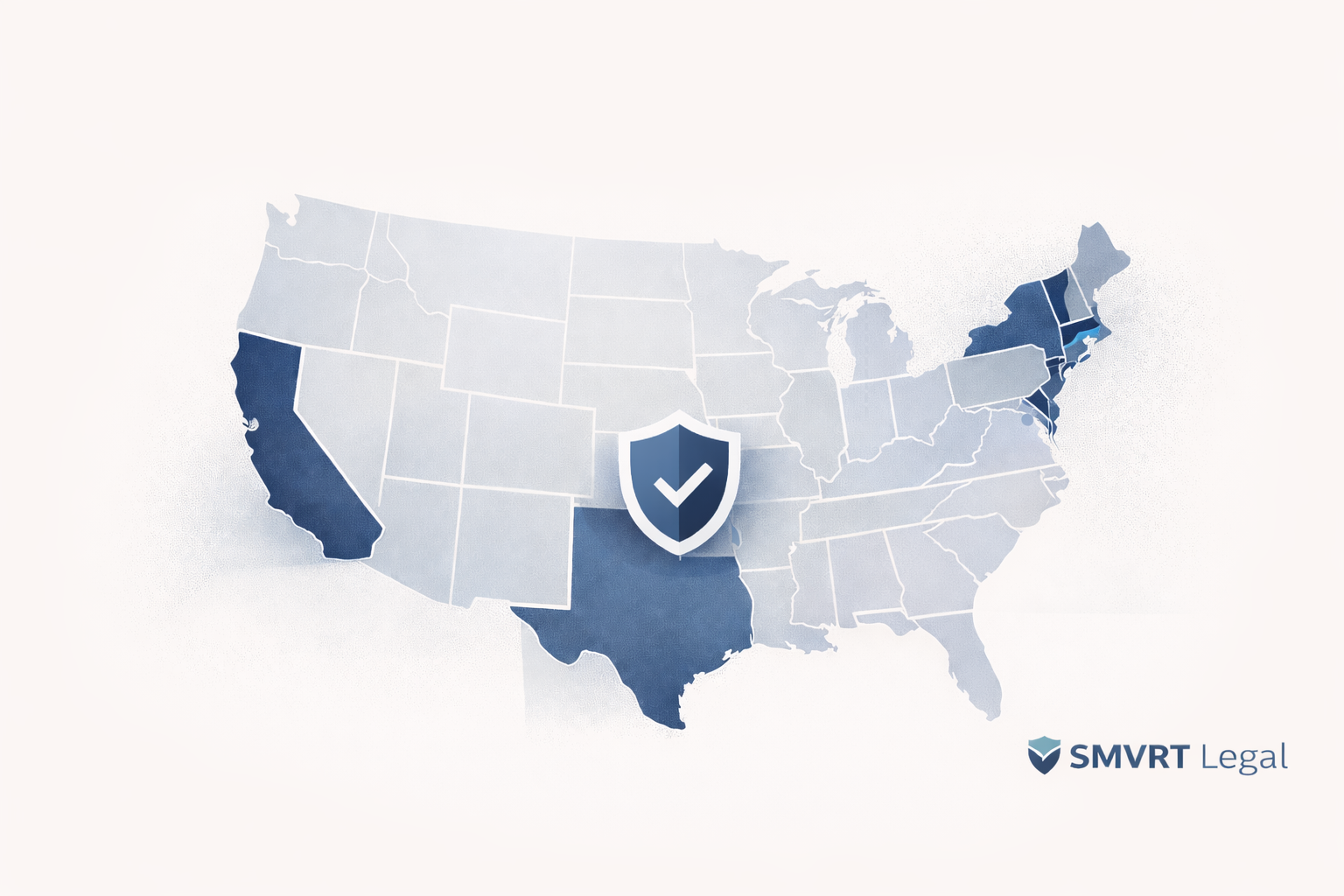
California: The ABC Test Under AB5
California’s AB5 law reshaped the gig economy. It introduced the ABC Test, which says a worker is an employee unless all three of these apply:
- The worker is free from control or direction in how they perform the work.
- The work performed is outside the usual course of the company’s business.
- The worker is engaged in an independently established trade or business.
That second prong — “outside the usual course of business” — is the real curveball. If you run a design agency and hire a freelance designer, they probably aren’t a contractor under AB5.
California also enforces these rules aggressively, and violations can lead to penalties of $5,000–$25,000 per worker.
Massachusetts: Even Stricter Than California (Yes, Really)
Massachusetts uses its own version of the ABC Test — and it’s arguably even tougher.
To classify a worker as a contractor, you must prove they’re free from control, their services are outside your usual business, and their work is independent and part of a distinct trade. Few exemptions exist, and the Attorney General enforces strictly. Err on the side of employee classification if unsure.
New York: “Freelance Isn’t Free” Act
New York’s law requires written contracts for any freelance work worth $800 or more over a 120-day period. Contracts must outline services, pay rate, and payment date. Violations can lead to double damages and civil penalties under the Wage Theft Prevention Act.
Business-Friendly States with Simpler Rules
Texas
Texas follows federal law without extra layers. A clear, signed Independent Contractor Agreement and proper 1099 filings usually suffice.
Florida
Florida aligns with IRS standards. Contract clarity and consistency are key for compliance and protection.
Georgia
Georgia expects proof of true independence (e.g., multiple clients, own tools). Use a robust agreement to document the relationship.
Colorado
Colorado uses a hybrid approach but requires businesses to show contractor autonomy. Enforcement is tightening, so retain records and clear contracts.
Evolving States to Watch in 2026
- Washington: Expanding protections for gig and contract workers in tech and logistics.
- Illinois: Increasing penalties for misclassification, including license loss for repeat offenders.
- North Carolina: Following IRS tests but tightening tax and recordkeeping rules.
States That Follow Federal Guidelines
Most states — including Arizona, Nevada, Michigan, Utah, and Pennsylvania — still rely solely on the IRS Common Law Test. If you operate in several of these states, you can use one federally compliant agreement across them — just localize governing law and dispute venue clauses.
How to Stay Compliant in Every State
- Know your state’s test. Use the IRS or ABC framework as your baseline.
- Use written contracts. Always have a signed Independent Contractor Agreement defining scope and independence.
- Avoid employee-like control. Don’t set hours or require onsite work unless essential.
- Keep clean records. Store contracts, invoices, and payments for at least three years.
- Review annually. Laws evolve fast — especially in CA, NY, and IL.
SMVRT Legal's Compliance Tool: Smvrt Legal’s Compliance Checker will let you upload your agreement and instantly see if it meets your state’s latest standards. Check your document for free > click here to start!
FAQs About Independent Contractor Agreements by State
1. Are independent contractor agreements different in every state?
Not entirely. Most follow the federal IRS test, but some — like California, Massachusetts, and New York — have extra requirements.
2. What is the ABC test?
It’s a three-part test that defines whether someone is truly independent. If they perform core business tasks, they’re likely an employee.
3. Do I need separate contracts for each state?
Not always. You can use one master template and customize clauses (like governing law) per state.
4. Can a contractor be reclassified as an employee later?
Yes — if your working relationship changes or you start exercising more control. Review agreements annually.
5. What are the penalties for misclassification?
Penalties vary by state but can include fines, back taxes, and unpaid benefits. California and Illinois impose some of the harshest.
Final Takeaways
- State rules matter. What’s fine in Texas might be illegal in California.
- Put it in writing. A clear Independent Contractor Agreement is your first line of defense.
- Stay proactive. Audit your agreements annually and track legal changes.
As states tighten rules in 2026 and beyond, compliance will only become more critical — especially for remote and gig-based teams.
Ready to stay compliant across all 50 states?
Start with Smvrt Legal’s Independent Contractor Agreement template — and check our Contractor Agreement Checklist for extra guidance.
Discover Smarter Legal Solutions
Build, review, and manage your business contracts with confidence. SMVRT Legal brings attorney-reviewed templates, compliance tools, and real legal guidance together in one platform.
Visit SMVRT Legal →