What is an Independent Contractor Agreement template?
An Independent Contractor Agreement is a written contract between a client or hiring business and a self-employed individual or company that will provide services in exchange for compensation. The document is also sometimes called a 1099 agreement, freelance agreement or contractor services agreement.
A template provides the structure for that contract. It identifies the decisions the parties should make, supplies baseline provisions and creates a consistent place to record the final terms. It is not a substitute for understanding the relationship: names, dates, deliverables, payment mechanics, ownership and termination rights must still be completed accurately.
SMVRT Legal does not simply hand you a blank file. It uses a lawyer-drafted agreement as the authoritative foundation, guides you through the facts and decisions that shape the provisions, checks for missing information and applies relevant state-aware compliance rules before preparing the agreement.
A contract defining services, compensation and legal responsibilities between a hiring party and a separate, self-employed contractor.
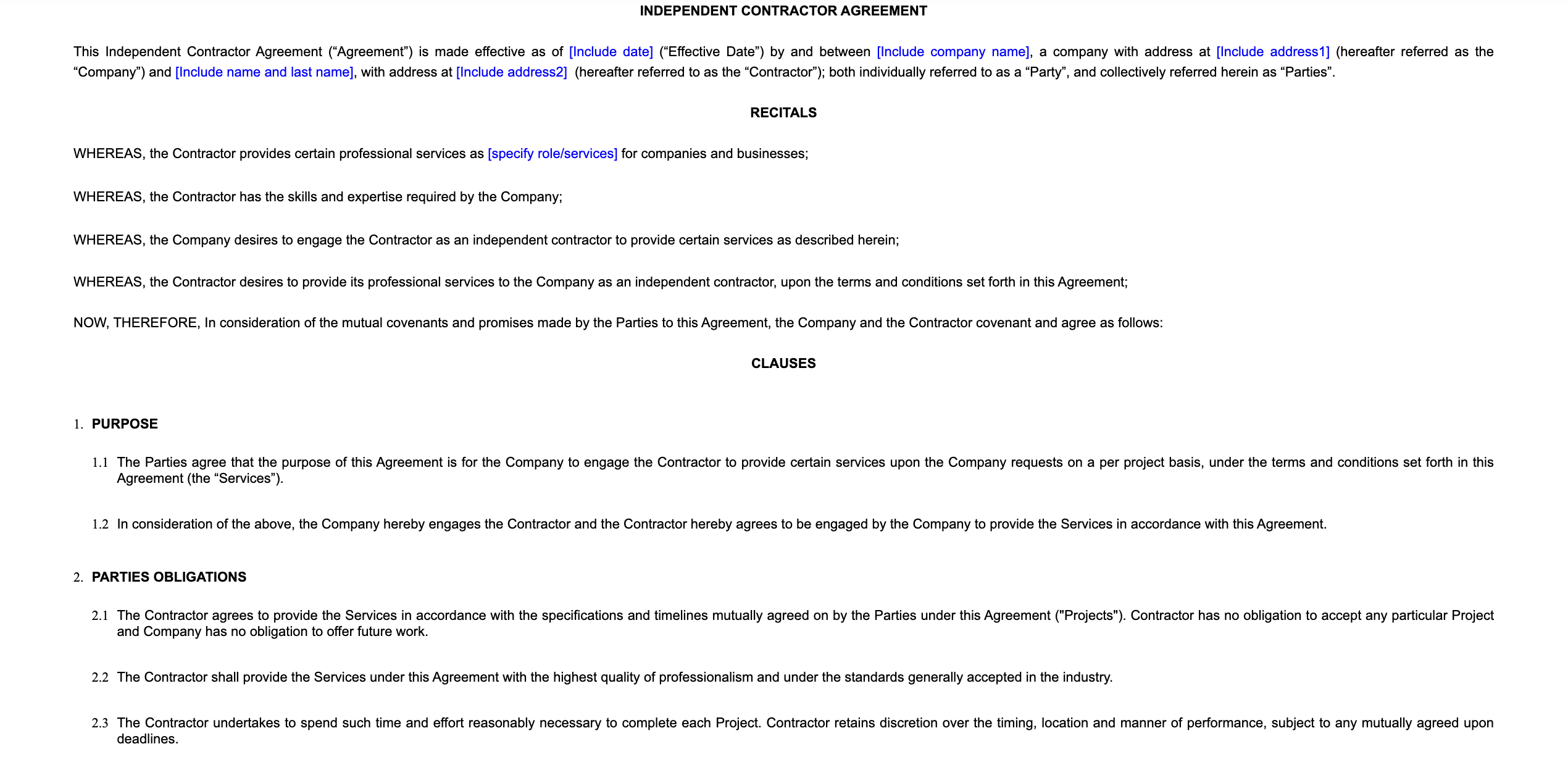
How SMVRT turns a template into your agreement
A standard independent contractor agreement can provide dependable structure, but the final document must reflect a particular engagement. SMVRT connects the legal foundation to the information that determines how the agreement should read.
The agreement is prepared from a controlled legal foundation using the facts, choices and jurisdictions connected to the actual contractor relationship.
When should you use the template?
Use an agreement before a contractor begins work or receives access to confidential information, systems, customers or intellectual property. Putting the relationship in writing early gives both parties an opportunity to resolve unclear expectations before money or deliverables are at risk.
A contractor will complete defined services or deliverables by a deadline.
A consultant or specialist will provide recurring work under agreed limits.
The engagement will create code, designs, content, inventions or other work product.
The contractor will encounter business plans, client information, pricing or systems.
A contractor agreement is not the correct document merely because the parties prefer the contractor label. If the business controls how the person performs the work or the arrangement otherwise functions as employment, an employment agreement and payroll treatment may be more appropriate. Compare the two structures in our Independent Contractor Agreement vs. Employment Agreement guide.
What should an Independent Contractor Agreement template contain?
A useful template should do more than identify the parties and state that the contractor is not an employee. It should answer the practical questions most likely to cause a dispute.
For a deeper explanation of each provision, read 10 Clauses Every Independent Contractor Agreement Should Include.
How to complete the template correctly
Identify the correct parties
Use complete legal names. If the contractor operates through an LLC or corporation, determine whether that entity—rather than its owner—is the contracting party.
Describe measurable work
Define services and deliverables in concrete terms. Include deadlines, review periods, dependencies, revisions and the standard for acceptance.
Choose the payment structure
State whether compensation is hourly, fixed-fee, milestone-based, commission-based or recurring. Explain invoicing, due dates, expenses and disputed charges.
Make ownership decisions
Identify what the contractor will create, what each party already owns and which assignments or licenses are necessary. Learn more in our guide to who owns independent-contractor work.
Plan the end of the relationship
Decide how long the engagement lasts, whether either party can terminate early, how much notice is required and what must happen during the final handoff.
Review state-specific concerns
Classification tests and restrictions on particular provisions vary. Start with our Independent Contractor Agreement by State guide.
What information should you gather before you begin?
The strength of an agreement depends on the information behind it. SMVRT’s guided intake is designed to collect the following details and identify what remains unresolved.
A template does not determine worker classification.
A written contract helps document what the parties intend, but calling a worker an independent contractor does not control the legal result. The actual relationship must support the classification.
For federal tax purposes, the IRS examines evidence of behavioral control, financial control and the type of relationship. Relevant facts can include instructions and training, who supplies tools, unreimbursed expenses, opportunity for profit or loss, benefits, permanence and whether the services are a key part of the business.
For a practical comparison of the two classifications, read our 1099 vs. W-2 worker-classification guide.
If the business retains substantial control over schedule, methods, training, tools or day-to-day performance, a contractor template cannot cure the underlying classification concern.
Worker-classification standards may differ depending on the law and jurisdiction involved. The U.S. Department of Labor has also proposed changes to federal classification guidance in 2026. When classification is uncertain, consult qualified counsel.
Blank, printable, Word or PDF: which format should you use?
A blank independent contractor agreement asks the user to recognize every missing field and legal decision. A standard agreement supplies baseline terms, but those terms still need to fit the engagement. Word makes text editable and PDF preserves presentation; neither format determines whether the underlying information or provisions are complete.
SMVRT’s approach is to begin with guided questions instead of handing the user an empty legal document. The Agent identifies required information, requests missing decisions and prepares a reviewable agreement inside the platform. The document can then be signed and stored in SMVRT; downloading a Word or PDF copy is a separate paid option.
Where standard and blank templates commonly break down
“Marketing services” does not identify deliverables, deadlines, approval rights or what counts as completion.
A rate alone does not explain invoicing, due dates, expenses, deposits, disputed charges or payment after termination.
An assignment of new work may not address the contractor’s existing tools, code, templates or licensed components.
Classification depends on applicable legal tests and real practices—not the title of the agreement alone.
Restrictive covenants, classification rules and other provisions may require state-specific analysis or language.
Independent Contractor Agreement checklist
- Every party is identified by its complete legal name and correct entity type.
- The services, deliverables, deadlines and acceptance process are understandable.
- Rates, invoices, payment deadlines, expenses and taxes are addressed.
- The written independence terms match the actual working arrangement.
- Ownership and licensing of work product and prior materials are clear.
- Confidentiality obligations contain appropriate definitions and exclusions.
- Termination, final payment, return of property and handoff are covered.
- Governing law, disputes, notices and signatures are complete.
- State-specific or industry-specific provisions have been considered.
- Both parties understand the final document before signing.
Independent Contractor Agreement template FAQs
What is an independent contractor agreement template?
It is a reusable starting document for defining the services, payment, ownership, confidentiality, termination and independent relationship between a hiring business and a self-employed contractor.
Can I use a free independent contractor agreement template?
A free template may provide a starting structure, but it still needs accurate facts and appropriate provisions. Review the agreement for applicable state requirements, worker-classification concerns and terms that may not fit your engagement.
Does signing an agreement make someone an independent contractor?
No. The contract is relevant evidence, but classification depends on applicable law and how the relationship operates in practice.
Is an independent contractor agreement legally binding?
It can be when the ordinary requirements for contract formation and enforceability are met. Specific terms may be limited or unenforceable under applicable law, which is why the document should be tailored rather than treated as universally valid.
Can the agreement be signed online?
Yes. Independent contractor agreements can generally be signed electronically, subject to applicable law and ordinary contract requirements.
Should I use a Word or PDF template?
Word is convenient for manual editing; PDF preserves a final layout. A guided workflow can reduce missing information before generating a signature-ready document.
What is the difference between a blank and standard independent contractor agreement?
A blank agreement contains fields or provisions that still require decisions. A standard agreement supplies baseline language, but it must still be adapted to the parties, services, payment structure, ownership choices, governing law and actual working relationship.
How does SMVRT create the agreement?
SMVRT begins with a lawyer-drafted agreement foundation. The guided Agent captures the facts and decisions needed for the engagement, identifies missing information, applies relevant state-aware compliance checks and prepares the agreement for review, signature and storage.
When should I ask a lawyer to review the agreement?
Consider legal review when classification is uncertain, the work is regulated or high-risk, intellectual property is especially valuable, restrictive covenants are requested, liability is substantial or the parties operate across jurisdictions.
Create your Independent Contractor Agreement.
Answer guided questions and prepare your agreement inside SMVRT Legal.
Start My Agreement → No payment required to beginThis page provides general educational information and is not legal advice. Laws and regulations vary by jurisdiction and may change. Consult a qualified attorney for advice about your circumstances.